Healthy Ways to Gain Weight: A Practical, Science-Backed Guide
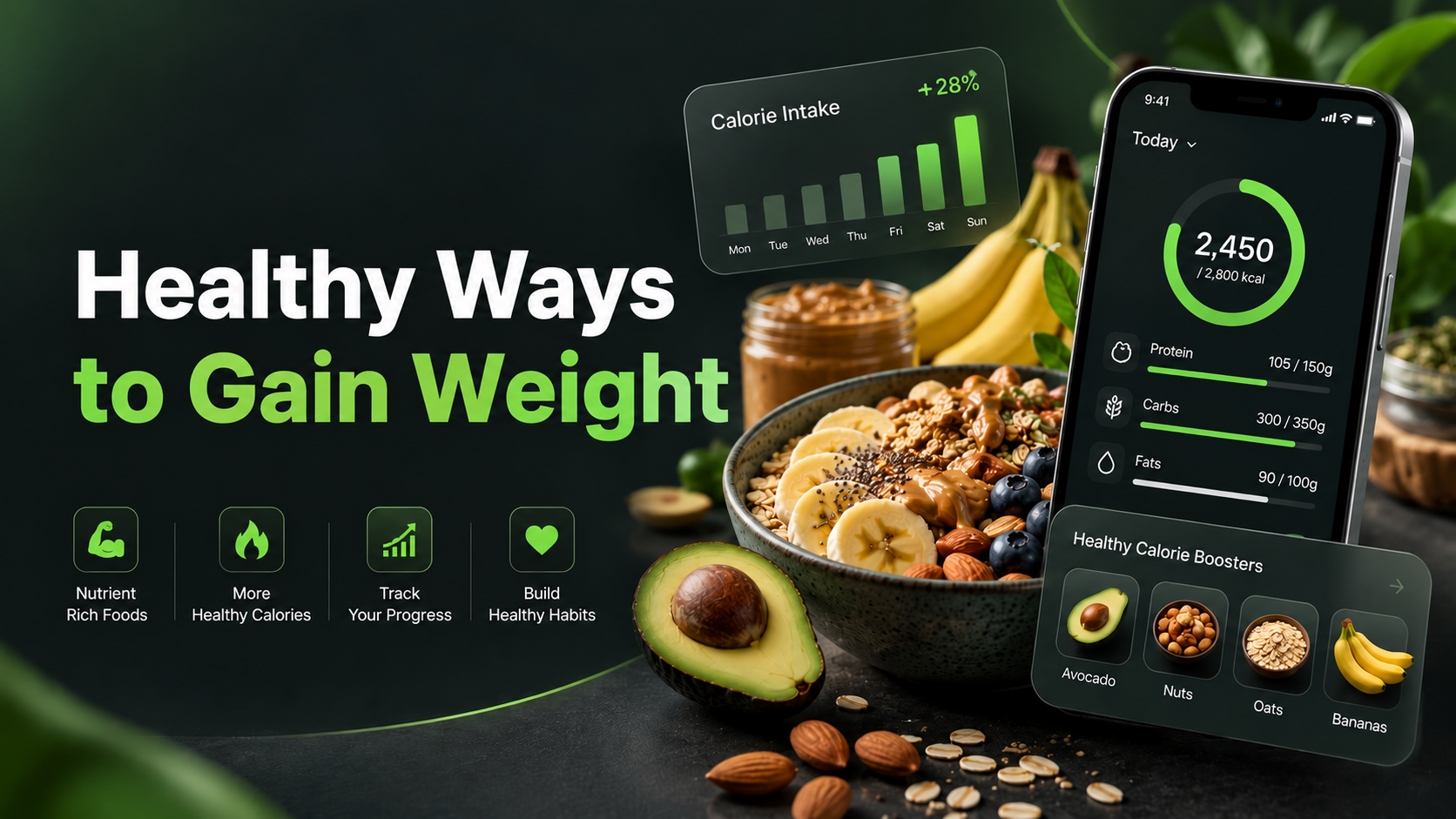
Healthy Ways to Gain Weight: A Practical, Science-Backed Guide
If you're underweight or just want to add some healthy pounds, "eat more" is only half of the advice. The other half is what you eat and how your body uses it. Gaining weight in a healthy way means building muscle and keeping your bones strong, not just adding fat. This guide covers the habits that make that possible.
How many calories do you need to gain weight?
To gain weight healthily, aim for a daily surplus of 300-500 calories above your maintenance level. Maintenance is the number of calories your body needs to stay at its current weight, and an online calorie calculator can give you a rough estimate. A surplus in this range supports a safe gain of about 0.5-1 pound (0.25-0.5 kg) per week. We also have an tdee calculator where you can find out exactly how much calories you need to take depending on your goal
A moderate surplus works better than a huge one. Eating far beyond your needs tends to pile on fat rather than muscle, and it can leave you uncomfortably full and quick to give up. Slow, steady progress is easier to keep going.
1. Prioritize nutrient-dense foods
Not all calories do the same job. Nutrient-dense foods pack extra energy and the protein, vitamins, and minerals your body needs to build muscle and maintain bone density. Good staples include:
- Nuts and nut butters: almonds, walnuts, cashews, peanut butter
- Avocados
- Olive oil: about 120 calories per tablespoon
- Full-fat dairy: whole milk, Greek yogurt, cheese
- Lean meats, fish, and eggs
- Whole grains, beans, and starchy vegetables: oats, rice, potatoes, lentils
Building meals around these foods gets you to your calorie goal without relying on sugary or heavily processed options.
2. Eat more frequently
If you've been underweight for a while, large meals can feel overwhelming. Your appetite may be small, and you can feel full after only a few bites.
The fix is to eat 5-6 smaller meals and snacks through the day instead of three big ones. Set reminders if you tend to forget to eat. A handful of trail mix at 11 a.m. and a yogurt bowl at 4 p.m. add up quickly, and neither feels like a struggle.
3. Drink your calories
Liquid calories are one of the easiest ways to eat more without feeling stuffed. Smoothies and shakes go down faster and don't fill you up the way a large plate does.
A simple high-calorie smoothie formula:
- Base: full-fat milk or a fortified alternative
- Protein and creaminess: Greek yogurt
- Healthy fats: a spoonful of peanut or almond butter
- Carbs and flavor: banana, berries, or oats
Have one between meals rather than instead of a meal, so the extra calories are truly extra. Read this article for more info.
4. Add extras to the foods you already eat
You don't need to overhaul your diet. Boosting the calorie density of your usual meals can close the gap with very little extra volume:
- Stir nut butter into oatmeal or spread it on toast
- Sprinkle cheese over soups, eggs, and vegetables
- Drizzle olive oil over salads, rice, and cooked vegetables
- Add seeds to yogurt, salads, and cereal
- Blend avocado into smoothies or mash it onto toast
Each addition is small, but three or four of them a day can make up most of your surplus.Check out our article on how to create weekly meal plans
5. Add strength training
Calories tell your body to gain weight, but exercise tells it where to put it. Resistance training 2-3 times per week directs the extra energy toward muscle growth rather than fat storage.
You don't need a fancy gym routine. Start with:
- Squats
- Lunges
- Push-ups or presses
- Rows or other pulling exercises
- Weightlifting or resistance bands, if you have access
Begin with lighter weights, focus on form, and build up gradually. Strength training also supports bone density, which matters when you're gaining weight for your long-term health.
6. Avoid empty calories
It's tempting to hit your numbers with fast food, sweets, and soda, but those calories come with little nutrition. Steer clear of junk food, diet sodas, and excessive sugar, which provide calories without the nutrients needed for overall health and hormonal balance.
You can still enjoy treats in moderation. Just make sure most of your extra calories come from foods that also give your body something useful in return.
When to talk to a doctor
If you're underweight and can't figure out why, or you've lost weight without trying, it's worth seeing a healthcare professional. Unexplained weight loss or difficulty gaining weight can sometimes point to an underlying medical issue. A doctor or registered dietitian can rule out other causes and help you build a plan that fits your body, your health history, and your goals.
Frequently asked questions
How fast can I safely gain weight?
About 0.5-1 pound per week is a safe, sustainable pace for most people. Faster gains usually mean more fat and less muscle.
Is it better to gain weight with food or supplements?
Whole foods should come first, since they provide a mix of nutrients that supplements can't fully replace. Shakes and smoothies made from real ingredients are a useful middle ground.
Why do I feel full so quickly?
If you've been underweight, your appetite may be smaller than normal. Eating 5-6 smaller meals and drinking some of your calories can make it more comfortable.
Do I need to exercise to gain weight?
It isn't required, but strength training 2-3 times a week helps ensure the weight you gain is muscle, not just fat.
Key takeaways
- Aim for a 300-500 calorie daily surplus and 0.5-1 lb gain per week
- Choose nutrient-dense foods such as nuts, avocados, olive oil, full-fat dairy, and lean meats
- Eat 5-6 smaller meals, and use smoothies and shakes to add calories easily
- Boost existing meals with cheese, nut butter, seeds, and healthy oils
- Do strength training 2-3 times weekly to build muscle
- Avoid empty calories from junk food and sugar
- See a professional if weight gain is unusually difficult
References
- Mayo Clinic: Underweight: Tips for healthy weight gain
- ScienceInsights: How to Gain Weight for Females the Healthy Way
- wikiHow: How to Gain Weight (for Women)
- Verywell Fit: 8 Healthy Weight Gain Methods for Females
About the author

Shahbaz Ahmad