How to hit a protein goal without exceeding calories

The hardest part of eating more protein is usually not finding protein itself. Most people already know that chicken, eggs, yogurt, fish, tofu, and protein shakes can help them reach their target. The real problem is that protein rarely arrives alone. It often comes with fat, carbs, sauces, oils, or calorie-dense add-ons that push the total intake higher than planned. If your goal is to hit a protein target while staying inside a calorie limit, the focus has to shift from simply “eating more protein” to choosing protein in a way that fits your energy budget.
Protein still contains calories, roughly four calories per gram, so a high target takes up a meaningful part of the day. If you aim for 150 grams of protein, that is about 600 calories from protein alone. That leaves the rest of your calories for carbs, fats, vegetables, snacks, cooking oils, and anything else you eat. The mistake many people make is treating protein as a free food or assuming that any high-protein choice is automatically good for their goal. A peanut butter spoon, a large portion of fatty beef, a protein bar, or a creamy high-protein dessert can help with protein, but it may also make the calorie budget much harder to control.
Start with the calorie cost of protein
A practical way to approach this is to think of protein as a fixed cost. Once you know your target, you can estimate how many calories it will take and then decide how to spend the remaining calories. This makes the whole process less random. If you have 2,000 calories for the day and 150 grams of protein, you already know that around 600 calories are spoken for. The remaining calories need to cover everything else, which means you cannot be careless with added fats, snacks, or liquid calories. Here is the protein calculator you can check later how much your body needs
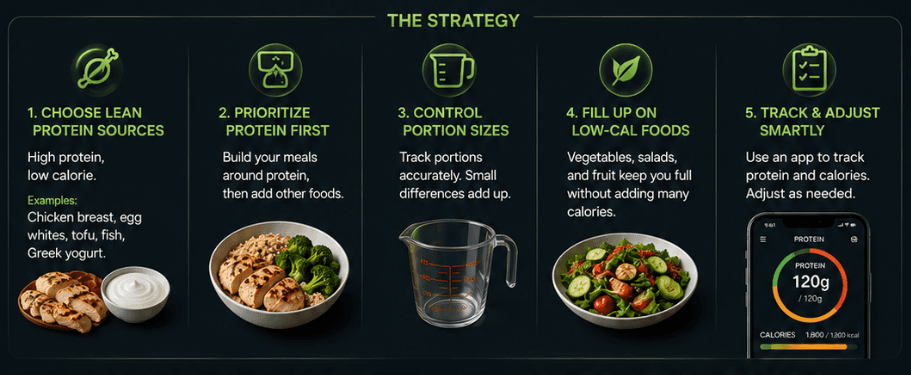
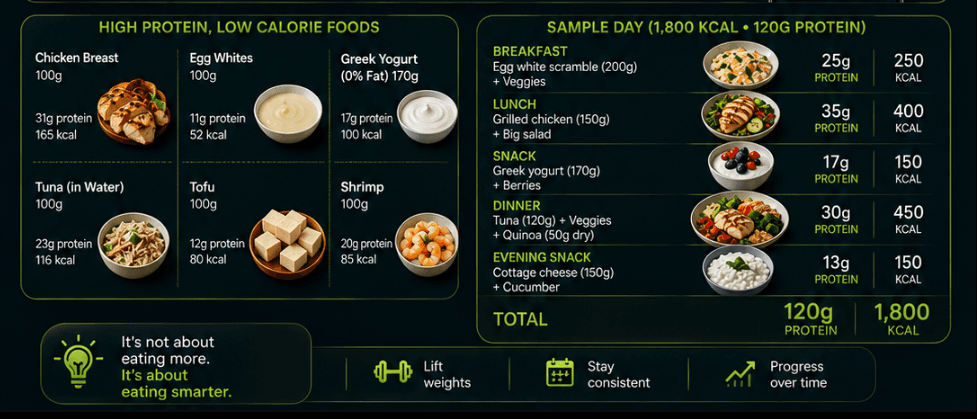
This also explains why lean protein sources become so valuable. Foods like chicken breast, turkey breast, white fish, tuna, egg whites, low-fat Greek yogurt, cottage cheese, tofu, seitan, and protein isolate give you a strong amount of protein without forcing you to spend too many calories on fat. That does not mean fattier foods are bad. Salmon, whole eggs, nuts, avocado, and higher-fat dairy can all fit into a healthy diet. But when calories are tight, they are harder to build around because they cost more calories per gram of protein. The best approach is usually to use lean protein as the base and then add higher-fat foods in controlled amounts.
Build meals around lean protein anchors
One of the simplest ways to hit your target is to give every meal a clear protein anchor. Instead of trying to figure out the whole day at once, decide what the main protein source will be at breakfast, lunch, dinner, and possibly one snack. For many people, aiming for roughly 25 to 40 grams per meal makes the total feel much more manageable. If your target is 140 grams, you might get 30 grams at breakfast, 40 at lunch, 40 at dinner, and 30 from a snack. If your target is higher, you increase each meal slightly or add a second snack.
This structure also helps with hunger and consistency. Protein is generally more satisfying than refined carbohydrates, and meals built around a solid protein source tend to keep you fuller for longer. But protein alone is not enough. Meals still need volume, fiber, and enough carbs or fat to make the diet feel sustainable. A useful plate formula is to start with the protein anchor, add vegetables or salad for volume, include a carb source such as rice, potatoes, oats, pasta, or fruit, and then finish with a small measured amount of fat. That way you get enough protein without making the meal feel tiny, and you also avoid the common problem of eating enough protein but still feeling unsatisfied.
If you follow a vegetarian or plant-based pattern, the same principle still applies, but the protein sources change. Tofu, tempeh, seitan, soy yogurt, high-protein dairy, legumes, and protein powder can all work. The only difference is that some plant proteins come with more carbs or fat, so portions may need more attention. That is not a flaw, just something to plan for. The goal is not to find one perfect food. The goal is to create a repeatable pattern where each meal contributes a predictable amount of protein without overspending calories.
Control the calories that hide around protein
Most people do not miss their calorie target because of the chicken or the Greek yogurt. They miss it because of what comes with the protein. Cooking oil, sauces, cheese, nuts, granola, dressings, butter, creamy marinades, coffee drinks, juice, alcohol, and protein snacks can add up very quickly. A tablespoon of oil is around 120 calories, and if you pour without measuring, you can easily add several hundred calories to the day without feeling like you ate much more. The same is true for peanut butter, cheese, and “healthy” snack bars. They may support protein intake, but they can also quietly make the diet much more calorie-dense.
This is where tracking becomes useful, at least for a short period. Weighing or measuring key foods for a week gives you a much clearer picture of what you are actually eating. Pay special attention to oils, sauces, nut butters, cheese, grains, and snacks, because these are the areas where estimates often fail. You do not have to track everything forever, but a few days of honest tracking can reveal the difference between what you think you are eating and what you are actually eating. If you eat out often, this becomes even more important, because restaurant meals usually contain more oil, butter, and sauce than people expect. A simple rule for eating out is to choose grilled or baked protein, ask for sauces on the side, and be careful with fried sides, creamy dishes, and large portions of cheese or fatty meat.
Protein powder can also fit here, but it should be treated as a tool rather than a magic solution. It is useful when you need to close a small gap without adding many calories, especially if you are already at 120 or 130 grams and need another 20 grams. A scoop of whey isolate mixed with water or low-fat milk can be efficient. But some protein shakes and bars are more like desserts, with added sugar, fat, and high calories, so labels matter. If a protein product costs 350 calories for 20 grams of protein, it may not be the best choice when your calorie budget is tight. The best protein sources for this goal are usually those that give you a high return of protein for a moderate calorie cost.
Make the plan flexible enough to follow
A high-protein, calorie-controlled diet only works if you can actually follow it, so it needs some flexibility. If every meal is dry chicken and plain broccoli, you may last a few days before the diet feels miserable. Use spices, herbs, mustard, hot sauce, vinegar, garlic, lemon, low-calorie sauces, and better cooking methods to make food enjoyable. Also, do not be afraid to adjust the rest of the diet. If your calories are higher, you have more room for carbs and fats. If your calories are lower, you may need to be stricter with added fats and snacks while keeping protein stable. The point is to protect protein first, then adjust the rest.
A simple example helps show how this works. Breakfast could be Greek yogurt mixed with protein powder, berries, and a small amount of oats. Lunch could be chicken breast with rice, vegetables, and a teaspoon of olive oil. A snack could be cottage cheese and an apple. Dinner could be white fish with potatoes, greens, and another small measured amount of fat. Depending on portions, a day like that can land around 150 grams of protein without requiring extreme calorie intake. If you need more calories, you add rice, oats, fruit, avocado, nuts, or another carb source. If you need fewer calories, you reduce fats and extras before reducing protein.
The lesson is that hitting a protein goal without exceeding calories is not about perfection. It is about structure. Choose lean protein anchors, spread them across the day, watch the calorie-dense foods that surround them, and track long enough to know what you are actually eating. Once that system is in place, the goal becomes much easier. You stop relying on random high-protein snacks and start building days that support your target without pushing your calories out of control.You can also get tips from Leanup AI meal Planner
About the author

Shahbaz Ahmad