
Building Muscle at Home: Why a Macro Tracker Matters
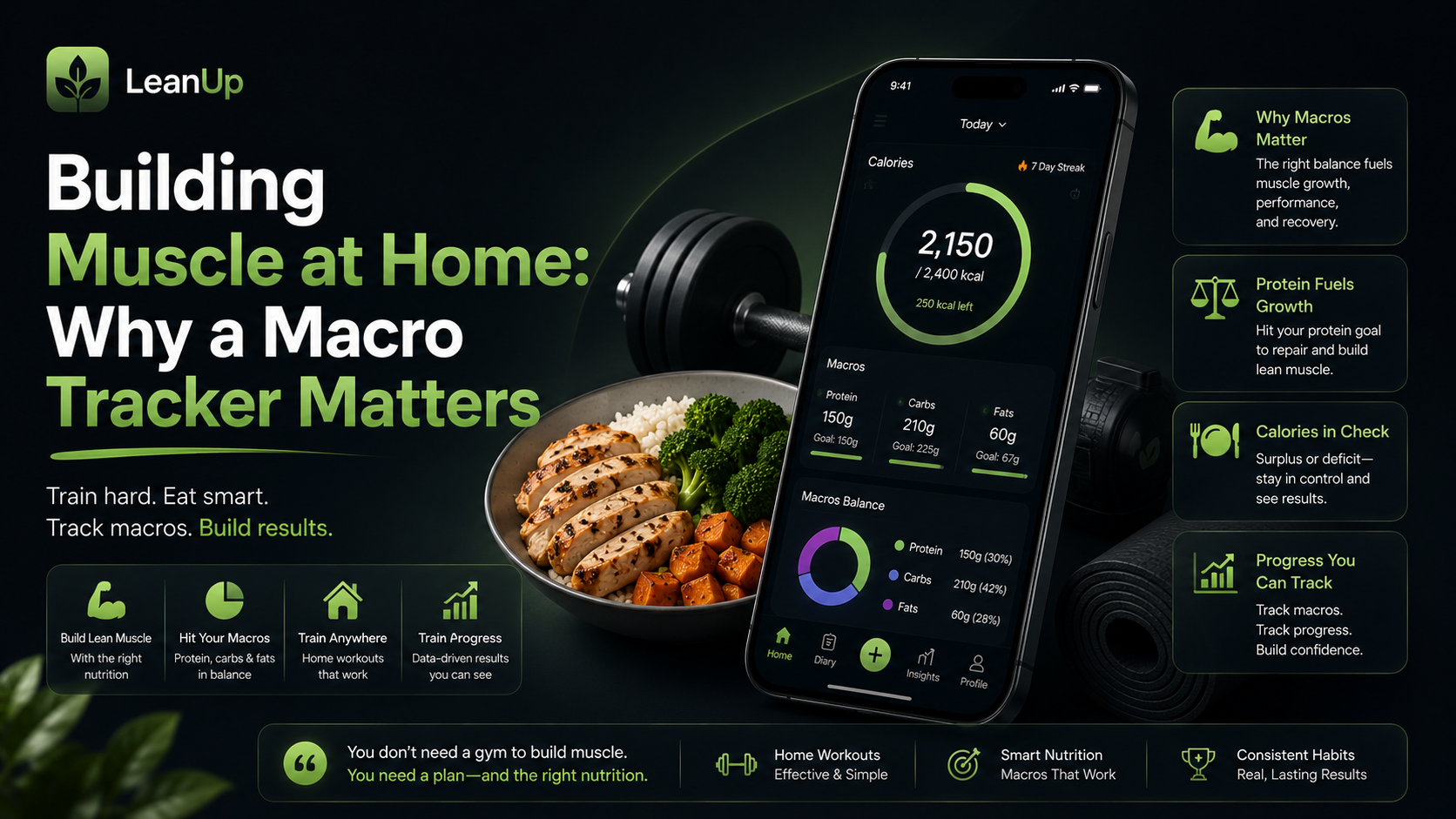
Building muscle at home comes down to one unglamorous truth: you cannot out-train a bad macro setup. No gym access does not mean no progress — but it does mean your protein, calorie surplus, and recovery nutrition have to be dialed in, because you do not have the extra training volume a gym setup gives you to compensate for sloppy eating.
That is where a macro tracker earns its place. The right one does not just log what you ate it tells you whether what you ate is actually building muscle or just filling you up.
Why Macros Matter More When You Are Training at Home
Home muscle-building programs body-weight progressions, resistance bands, adjustable dumbbells rely heavily on consistency and progressive overload with limited equipment variety. That puts more pressure on your nutrition to do the heavy lifting.Protein intake needs to stay consistent daily (roughly 1.6–2.2 g per kg of body-weight for most people building muscle), not just “high” on workout days.
Calorie surplus needs to be moderate and steady home training typically burns fewer calories than a full gym session, so overshooting your surplus turns into fat gain fast.Meal timing around home workouts matters because you do not have a gym fridge, shaker bottle station, or vending machine to lean on your kitchen is the only fuel source in the building.
A generic calorie counter tells you “you ate 2,400 calories today.” It will not tell you whether those calories had enough protein to support the workout you just did in your living room.
What to Actually Look For in a Macro Tracker
Not every tracking app is built for muscle gain — most default to weight-loss logic (calorie deficit, low-carb suggestions), which works against you when your goal is a lean surplus.
Look for:
- Muscle-gain-specific macro targets, not just generic calorie goals
- Photo or quick-log food entry — home training already eats your time; logging should not
- Protein-first insights, not just total calories
- Meal suggestions built around real, accessible ingredients — not restaurant-menu logic
- Progress tracking tied to strength/reps, not just the scale
Spreadsheet vs. Generic App vs. Specialized Muscle-Gain App
A spreadsheet works if you enjoy manual math and have the discipline to update it weekly. A generic calorie app is faster but built for the wrong goal — it will nudge you toward eating less, not eating smarter.
A specialized muscle-gain or adaptive macro app (such as LeanUp, MacroFactor or similar) is built specifically around macro insights for muscle-gain goals, which is the difference that actually shows up on the scale and in your lifts
Pairing Muscle-Gain Targets With Practical Home Meals
Knowing your target is only half the job — hitting it with food you will actually cook at home is the other half. A few examples of pairing macro targets with realistic home meals:
- High-protein, low-effort: Greek yogurt + whey + frozen berries — hits 35–40 g protein in under 2 minutes, no cooking required.
- Post-workout meal: Eggs + oats + peanut butter — balances fast-digesting carbs with protein for recovery after a home resistance session.
- Bulk-friendly dinner: Ground turkey or chicken thigh + rice + olive oil — easy to scale portions up or down depending on your daily surplus target.
- Snack-based surplus filler: Cottage cheese + nuts + honey — useful when you are short on your daily calorie target and do not want another full meal.
A good macro tracker flags gaps like “you are under on protein and it is 7 pm; here is a meal that closes the gap without overshooting fat intake.”
The Bottom Line
If you are building muscle at home, your macro tracker needs to work like a coach, not a calculator. It should know the difference between a surplus for muscle gain and a deficit for weight loss, catch protein gaps before they become a pattern, and suggest meals you can actually make in your own kitchen not a diet-app fantasy menu.
That is the gap between a generic calorie counter and a tracker built specifically around macro insights for muscle-gain goals.
FAQ
Do I need a gym to build muscle with a macro tracker?
No. Home resistance training builds muscle effectively when paired with consistent protein intake and a controlled calorie surplus — the tracker’s job is making sure your nutrition matches your training, regardless of where you train.
How much protein do I need to build muscle at home?
Most people building muscle need roughly 1.6–2.2 g of protein per kg of body-weight daily, spread fairly evenly across meals rather than loaded into one sitting.but if you are not srue you check here protein calculator
Is a calorie deficit ever okay while building muscle?
Only in specific cases (like body recomposition for beginners or those returning to training). For most home lifters, a slight, controlled surplus with high protein is the more reliable path to muscle gain.
About the author

Shahbaz Ahmad