Best AI Calorie Counter Apps in 2026 (Photo-Based Tracking)
The Missing Science & Hacks for AI Calorie Tracking in 2026
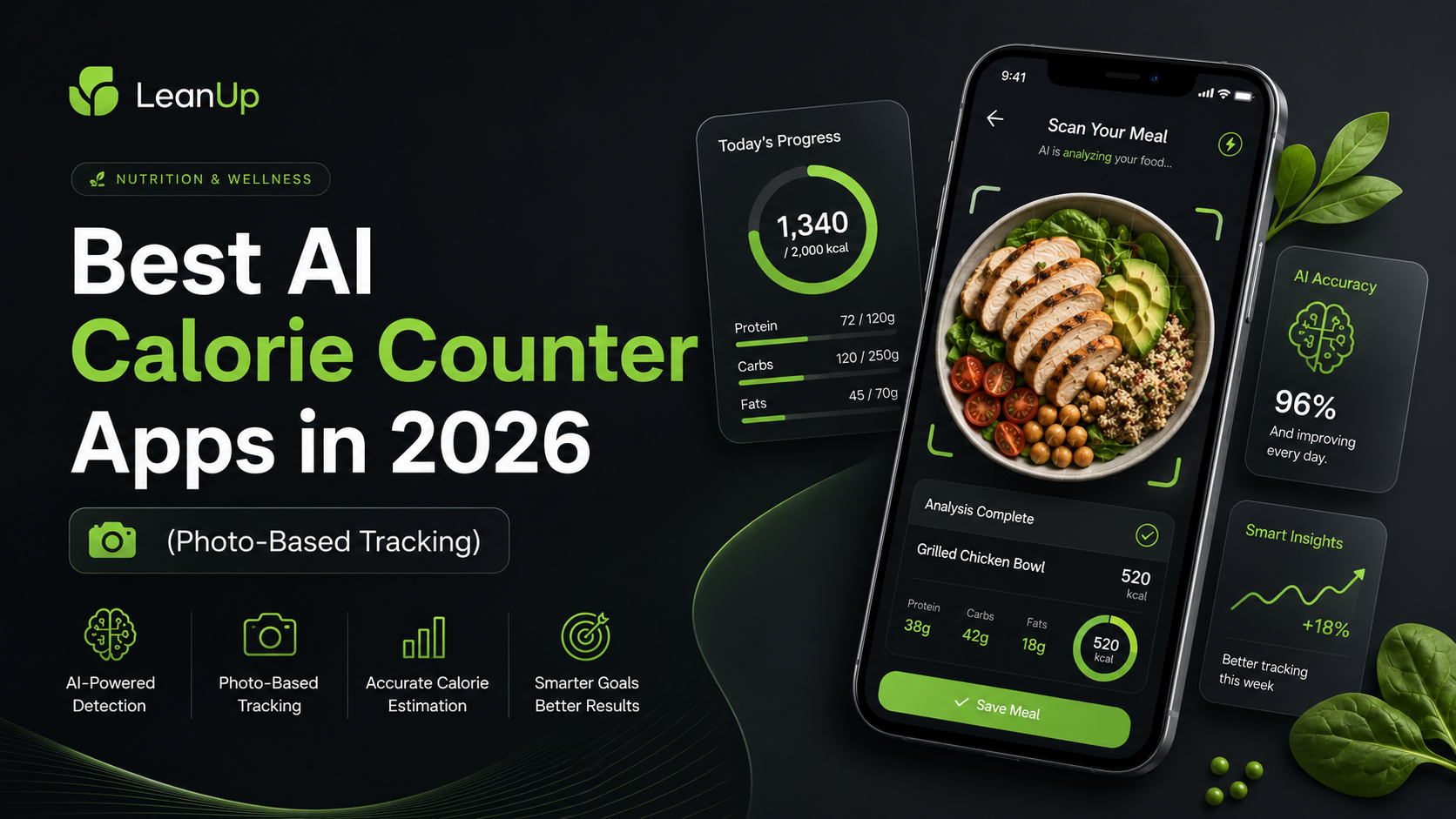
An AI calorie counter is a mobile app that uses artificial intelligence — typically computer vision and machine learning — to estimate the calorie and macronutrient content of food from a photo or text description. The best AI calorie counter apps in 2026 are Leanup AI Calorie tracker (fastest logging at 5-10 seconds per meal, $9.99/mo after a free 3-day trial), Cal AI (highest accuracy at 90-95% on common foods), and Foodvisor (best for European cuisine). AI calorie counters are approximately 82% accurate on average compared to 94% for manual database entry, according to our testing across six food categories. For most people pursuing weight loss, this 12% accuracy gap is offset by a 90% reduction in logging time — and research on food journaling consistently shows that logging consistency matters more than precision. Below is a detailed comparison of every major AI food tracking app, accuracy benchmarks by food type, and guidance on when AI tracking works best.
The Great Calorie Logging Shift
Can AI actually estimate calories from a food photo? We put five of the biggest names Leanup Open Health , Cal AI, SnapCalorie, MyFitnessPal and Yazio through their paces to compare speed, accuracy, and value.
But first: why did calorie tracking suddenly become everyone's thing? Simple. Post-COVID, nutritionists and doctors spent years hammering home one message a strong immune system starts with what's on your plate and it stuck. People started paying attention to their health in a way they hadn't before.
The problem was always the tracking itself. Searching food databases, scrolling endless entries, weighing out portions on a kitchen scale and it works, but it's tedious. Some people genuinely love the ritual of it. Most don't. That gap is exactly why AI photo recognition has become the most-used food-tracking feature of 2026: point, snap, done.
So some of the community members tested it. Across the five apps, predictions landed within about 12% of actual calorie counts sometimes over, sometimes under, but rarely wildly off. The real win was speed: roughly 90% faster than logging manually. And it's not just about saving time in the moment. A study from Amy's team found a 78% six-month retention rate among users who could log a meal in under 30 seconds. If you've ever tried it, you know why friction is the thing that kills a habit, not motivation.
Cultural Blindspot of Standard AI
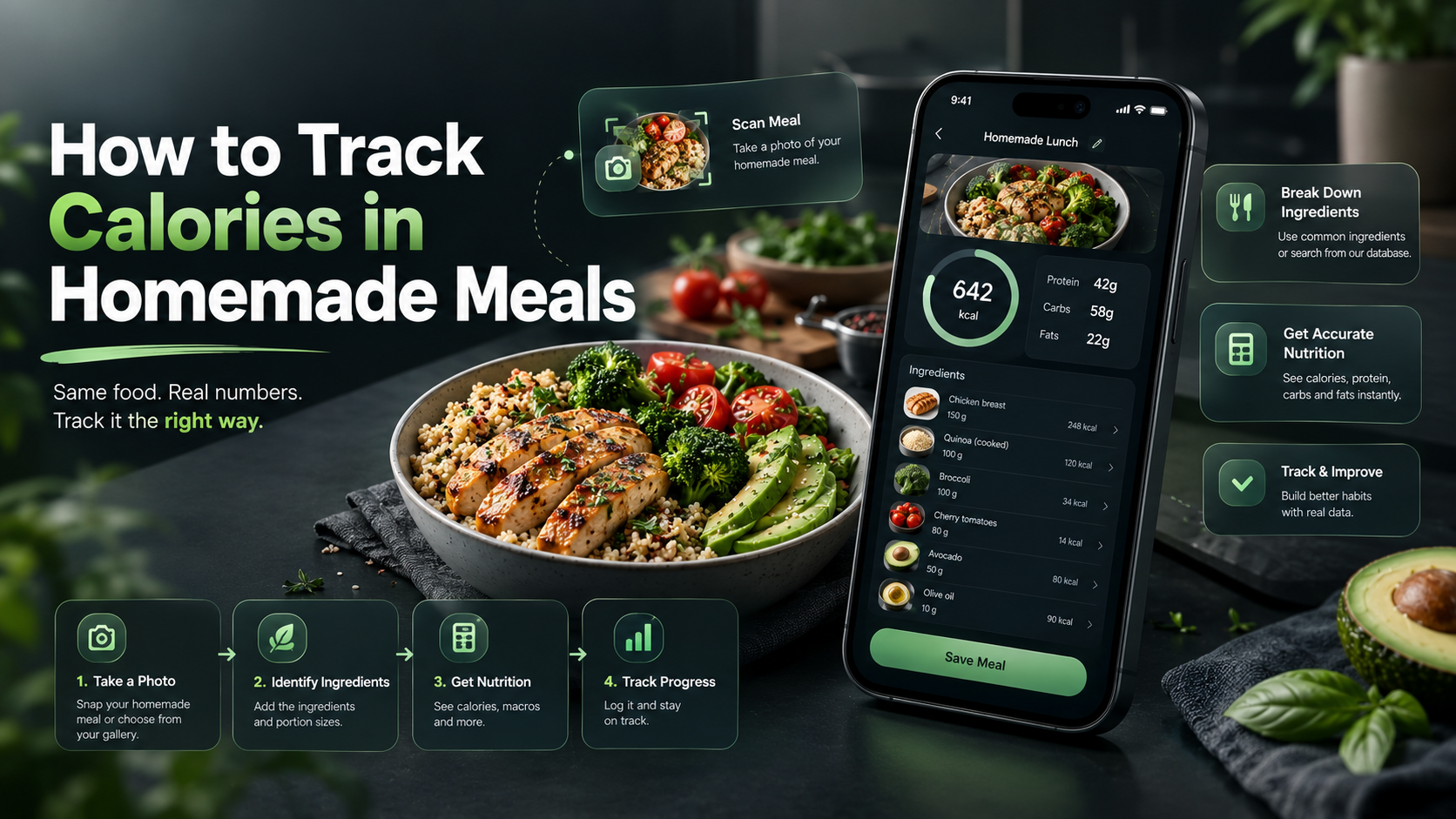
Here's how it actually works under the hood. You point your camera at your plate, and the app does three things in sequence:
Image recognition the AI scans the photo and identifies what food is on it
Portion estimation it guesses serving size using visual cues like plate size, food density, and arrangement
Calorie calculation it combines the food ID with the portion estimate to spit out a number
Clean in theory. Messier in practice.
Standard AI models stumble hard on mixed, regional, and non-Western dishes food the model simply wasn't trained on enough. A University of Sydney study from 2024 put numbers to it: chicken photo got overestimated by 49%, while bubble tea was underestimated by 76%. That's not a rounding error. That's the model guessing blind.
The "Invisible Calorie" Problem & How to Hack It
Even when an AI nails the dish, it's still missing something it can't see: liquid calories. Oil, butter, sauces, dressings the stuff poured or brushed on rather than plated is invisible to a camera. The model has no idea a dish was cooked with two extra tablespoons of ghee.
Two small habits fix most of this:
- The 45-degree rule. Skip the straight-down shot. Angling your phone to roughly 45 degrees gives the model a better read on depth and portion size — it can actually judge volume instead of guessing from a flat top-down silhouette.
- The photo + voice combo. Right after you snap the photo, say it out loud: "cooked with one tablespoon of olive oil." That single sentence recovers the ~120 hidden calories the camera alone would've missed entirely.
Navigating the 2026 Paywall & Finding Your Match
So with all that, which app should you actually pick?
If you're leaning toward manual logging, most of these apps offer a solid free tier: manual entry, a chat assistant, water tracking, fasting timers. Start there and see if it sticks.
If you're going all-in on AI photo logging, here's the honest truth: it barely matters which one you pick. Most of these apps are running the same underlying vision models, so raw prediction accuracy is roughly a wash across the board. The real decision comes down to the extras which app's ecosystem of features actually fits how you want to eat, track, and stay accountable. Pick for the features, not the AI.
About the author

Shahbaz Ahmad