
Vegan Calorie Tracker Guide: Protein & Meal Plans Compared
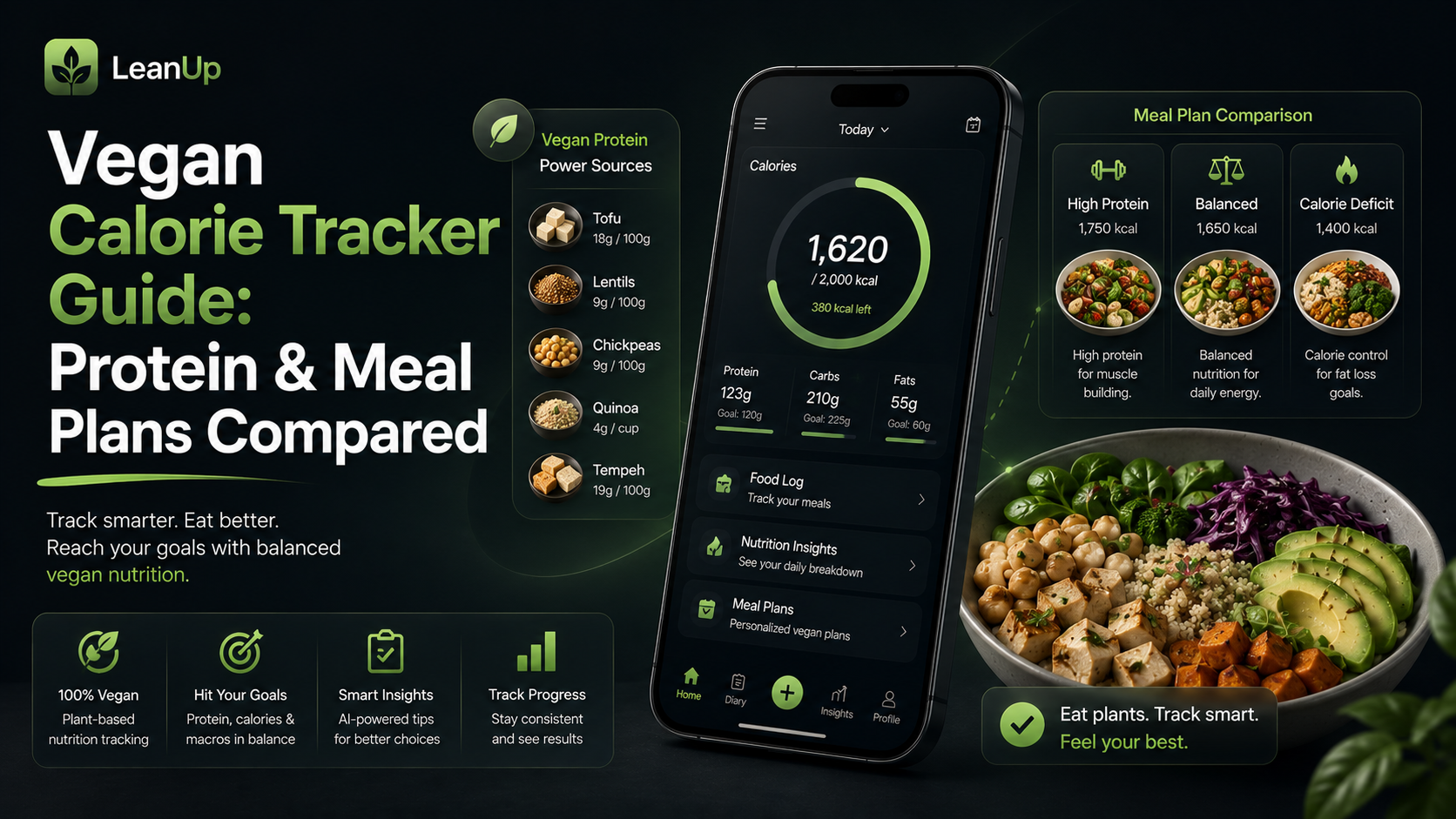
Vegan Calorie Tracker With Protein and Meal Plans: A Comparison Guide
Most calorie trackers were built for a general audience, then had a "vegan filter" bolted on later. That shows up fast once you start using one — protein numbers that don't account for amino acid completeness, food databases missing basic items like tempeh or seitan, and meal plans that swap out meat for "a salad" instead of an actual protein source.
If you eat plant-based, the tracker you pick matters more than it does for someone eating everything. Protein is harder to hit, harder to track accurately, and easier to under-report without noticing.
Why Vegan Calorie Tracking Is a Different Problem
A calorie tracker built for the general public assumes protein comes from one or two easy sources — chicken, eggs, whey. Plug those in and the numbers are simple.
Plant-based protein doesn't work that way. A cup of lentils, a scoop of pea protein, and a block of tofu all hit differently on amino acid profiles, and stacking several partial sources across a day is normal, not an edge case. A tracker that just adds up grams of protein without any sense of source or quality will tell you you've hit your target when you're actually short on key amino acids like lysine or methionine.
This is the gap that separates a generic calorie counter from an actual vegan calorie tracker with protein and meal plans built in.
What to Look For in a Vegan Calorie Tracker
Before comparing specific apps, it helps to know what "good" looks like for this use case:
- Dietary preference filtering — the app should let you set vegan (not just vegetarian) as a default, so search results, suggestions, and meal plans stay within that filter automatically instead of requiring manual checking every time.
- A plant-based food database — tofu, tempeh, seitan, nutritional yeast, and common meat substitutes should already be in the system, not something you add manually every time.
- Protein source awareness — some tools distinguish between complete and incomplete proteins, or at least group sources so you can see if you're relying on one or two foods for most of your intake.
- Meal plans built around plant protein, not plans that just remove meat and leave a gap.
- Photo or barcode logging that actually recognizes plant-based packaged goods, since a lot of general databases lag behind on newer vegan products.
Comparison Guide: How Popular Trackers Handle Vegan Needs
| Feature | General-purpose trackers (e.g. MyFitnessPal) | Nutrient-focused trackers (e.g. Cronometer) | Vegan-first / AI-assisted trackers(LeanUp) |
|---|---|---|---|
| Dietary preference filter | Basic vegetarian/vegan toggle, inconsistently applied | Vegan mode available, more nutrient detail | Vegan set as default, filters carry through search and suggestions |
| Plant-based food database | Large but crowd-sourced, quality varies | trong on whole foods, thinner on branded vegan products | Curated for common plant proteins and substitutes |
| Protein quality tracking | Total grams only | Some amino acid tracking | Source-aware protein tracking in some tools |
| Meal plans | Generic, protein swapped without replacement | Not a core feature | Built around plant protein combinations |
| Logging method | Manual + barcode | Manual, detailed entry | Photoscan + manual + barcode |
The trade-off is usually depth versus ease. Nutrient-focused apps give you more precise data but ask for more manual entry. General-purpose apps are fast to log in but weaker on plant-specific accuracy. Newer AI-assisted tools trade some of that manual entry for automated recognition, which helps consistency but depends on how well-trained the food recognition actually is.
Plant-Based Protein Sources Worth Tracking Closely
A handful of sources do most of the work in a vegan diet, and tracking them specifically — rather than lumping "protein" into one number — makes it easier to spot gaps:
- Legumes (lentils, chickpeas, black beans) — reliable base, moderate protein per calorie
- Soy-based foods (tofu, tempeh, edamame) — one of the few complete plant proteins
- Quinoa — a complete protein, useful as a base grain rather than a primary source
- Pea and rice protein blends — common in powders, complementary when combined
- Nutritional yeast — smaller contribution, but adds B12 in fortified versions
None of these alone covers everything. The pattern that actually works is combining two or three across a day a grain with a legume, or a soy source with a powder so the amino acid gaps in one are filled by another.
Balanced Planning, Not Just Protein Chasing
It's easy to over-index on protein grams and lose track of the rest of the plate. A vegan calorie tracker with meal plans should be helping you balance:
- Protein spread across meals, not concentrated in one
- Iron and zinc sources, since plant-based versions absorb less efficiently than animal-based ones
- Fat sources beyond just avocado and nuts — tahini, cooking oils, seeds
- Fiber load, which climbs fast on a plant-heavy diet and needs pacing, not avoiding
A tracker that only optimizes for hitting a calorie and protein number, without surfacing these, will get you to your macros while quietly leaving other gaps unaddressed.
If you are looking for exclusive vegan calories tracker than it will be hard to find but you can find apps and search the user reviews . Also you must ensure that the tracker is supporting plants or veges or fruits that can counts its proteins and sugars.It its important to notice that meals plans should be considered for vegans but in Leanup it can generate such type of meal plans for vegetarians.
About the author

Shahbaz Ahmad