
How to Track Calories Burned During Workout
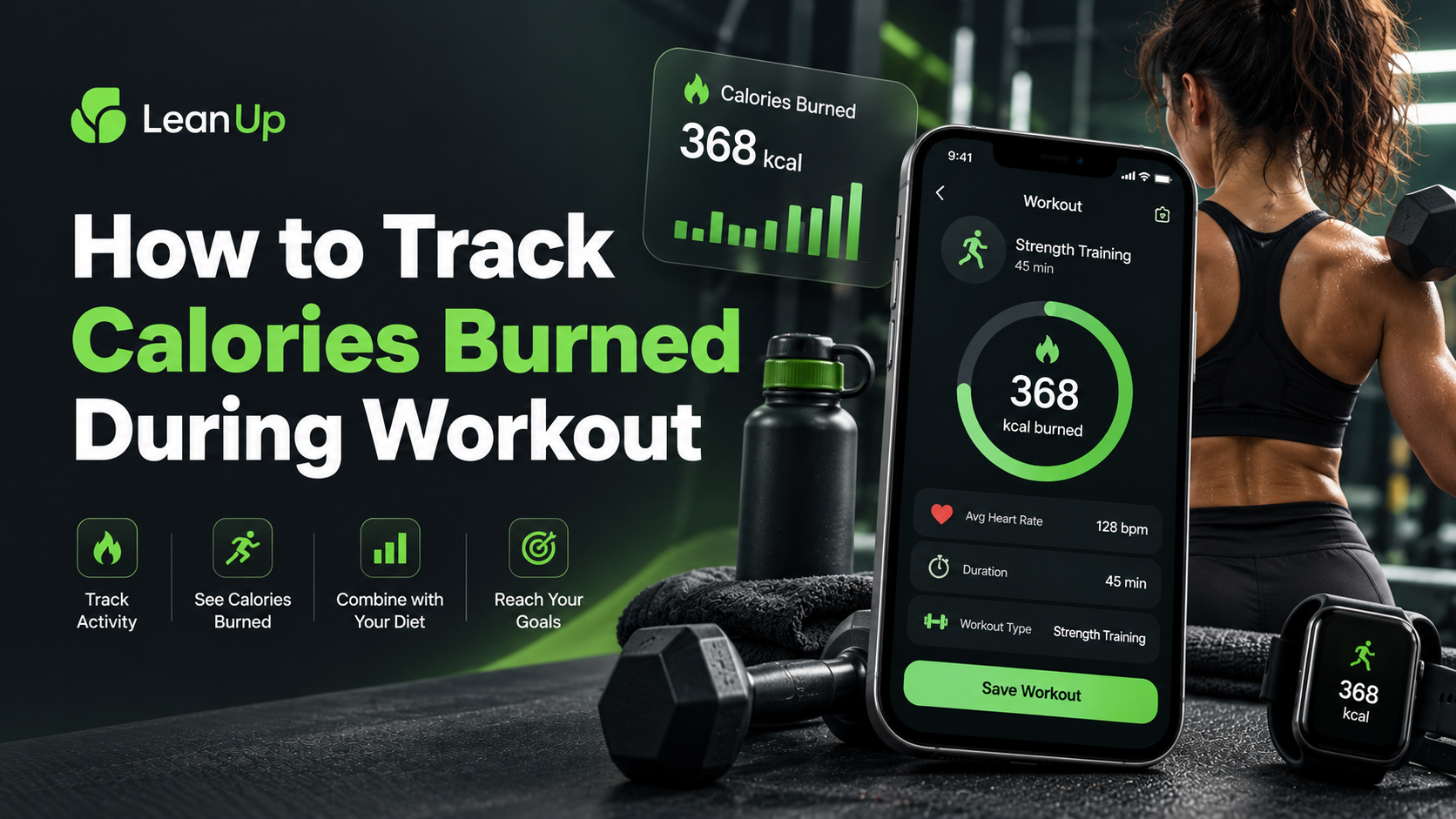
Tracking calories burned during a workout is easier than ever, but the numbers require careful interpretation. Smartwatches, smartphone apps, gym equipment, heart-rate monitors, and cycling power meters can all estimate energy expenditure; however, none provides a universally exact measurement. Recent World Health Organization (WHO) work identifies wearable devices as promising tools for measuring physical activity, while also emphasizing the importance of device selection, wear location, data processing, standardization, and cautious interpretation.
For fat loss, muscle gain, performance training, or general activity awareness, the most useful approach is to combine wearable estimates with personal information such as body weight, workout duration, exercise type, pace, intensity, and when available power output. Research shows that heart-rate tracking is generally more reliable than calorie estimates, but accuracy varies according to the exercise modality, intensity, sensor technology, and individual characteristics.
What calorie burn means
Calories burned during exercise represent an estimate of the energy your body uses to perform movement. This energy supports muscle contraction as well as breathing, circulation, and other physiological processes. As a result, a 30-minute run, cycling session, and resistance-training workout can produce different energy expenditures even when they feel similarly difficult.
Exercise calories should also be distinguished from total calories. Some devices, including Garmin products, separate active calories from resting calories. Resting calories are an estimate of the energy required for basic functions such as breathing and maintaining heart activity, and Garmin calculates them using information such as age, height, weight, and sex.garmin
This distinction matters because a device may report total calories for a period that includes both resting and active energy. Treating that entire number as calories burned exclusively through exercise can lead to overestimating the energy cost of a workout.
A practical way to interpret calorie burn is as a range rather than a precise measurement. A 2024 umbrella review found that wearable energy-expenditure estimates varied considerably, with reported errors ranging from approximately −21.27% to +14.76% across studies and devices. The 2020 systematic review by O’Driscoll and colleagues similarly concluded that accuracy varies substantially by activity type and that adding physiological sensors such as heart rate can improve estimates in many situations.
Choosing a tracking method
A fitness watch or smartphone app is usually the most convenient option. These systems combine profile information, movement data, exercise type, duration, and sometimes heart rate to estimate energy expenditure. They are useful for observing trends and comparing similar workouts, but they should not be treated as laboratory-grade metabolic measurements.
A chest-strap heart-rate monitor can provide a more dependable heart-rate signal than wrist-based optical tracking, particularly during dynamic or high-intensity exercise. Chest straps measure the heart’s electrical activity and generally maintain better contact during movement. A recent review found that chest-worn sensors typically outperform wrist-based devices during physical activity, although they can still be affected by poor contact, discomfort, motion artefacts, or deteriorating electrodes

A study comparing commercial heart-rate monitors with ECG found that a Polar H7 chest strap had the strongest agreement with ECG, with a concordance correlation coefficient of 0.996. Wrist-based devices performed less consistently, and their accuracy depended strongly on the exercise type.pubmed.ncbi.nlm.nih
For cycling, a power meter can be especially valuable because it measures mechanical power produced at the pedals. Garmin states that compatible devices can use power and speed data from a connected power meter to calculate cycling calories. This can provide a more consistent estimate than relying only on heart rate, although it still does not directly measure total human metabolic expenditure.garmin
Using heart rate correctly
Heart rate is commonly used in calorie-estimation algorithms because it often rises as exercise intensity increases. However, it is not a perfect substitute for measuring oxygen consumption or metabolic rate.
Heart rate can be affected by heat, dehydration, stress, caffeine, sleep, altitude, illness, and medication. Therefore, an unusually high heart rate does not always indicate a proportionally higher calorie burn. Apple’s technical documentation for cardio-fitness estimation notes that medications that limit heart rate, including some beta blockers and calcium-channel blockers, can affect VO₂ max estimates.apple
Research also shows that wrist-based heart-rate accuracy varies by activity. In one study, wrist devices performed relatively well during treadmill exercise but were less accurate during cycling and elliptical exercise. None of the tested wrist devices performed accurately on an elliptical trainer with moving arm levers, whereas the chest strap maintained the strongest agreement with ECG.pubmed.ncbi.nlm.nih
For this reason, heart rate should be treated as one input among several. When a watch reports an unexpectedly high calorie value, check:
- Whether the selected workout mode matches the actual activity.
- Whether the heart-rate graph contains spikes, gaps, or unusually low readings.
- Whether the watch is fitted snugly and positioned correctly.
- Whether heat, dehydration, caffeine, stress, or medication could have affected heart rate.
- Whether the reported calories are consistent with duration, pace, distance, resistance, or power.
Match the device to the workout
Different activities create different measurement challenges.
Treadmill walking and running often produce more stable readings because the movement pattern is relatively predictable. Cycling can be more difficult for optical wrist sensors because wrist movement and handlebar grip can interfere with the signal. Elliptical training with moving handles can be particularly challenging because the arm movement may not match the body’s overall workload.pubmed.ncbi.nlm.nih
Strength training is also difficult to estimate accurately. Heart rate may rise during a heavy set because of muscular strain, breath-holding, and the pressor response, while the total external movement may be limited. Rest periods further interrupt the steady movement patterns used by many algorithms.
Interval training and team sports present additional challenges because intensity changes rapidly. The latest research generally finds that energy-expenditure estimates are less consistent during high-intensity or intermittent activities than during steady-state exercise.pmc.ncbi.nlm.nih
Swimming requires a different approach because wrist-based heart-rate recording may be unavailable or less reliable in water. Garmin states that, when swimming heart rate is unavailable, its calorie calculations may use duration, body weight, swim speed, and stroke type.garmin
The 2024 Adult Compendium of Physical Activities offers another reference point by assigning standardized metabolic-equivalent, or MET, values to 1,114 activities. However, the Compendium itself explains that these population-level values are useful for comparison and classification, not for determining the exact calorie cost of an individual workout.pmc.ncbi.nlm.nih+1
Improve estimate quality
The first step is to keep your profile data accurate. Confirm your:
- Body weight.
- Height.
- Age.
- Sex.
- Maximum heart rate, if the platform allows manual entry.
- Fitness level or activity settings.
Garmin specifically notes that profile information is used in calorie calculations and recommends checking the accuracy of heart-rate and power data when results appear abnormal.garmin
Sensor placement also matters. A wrist device should be worn snugly, without being so tight that it becomes uncomfortable. Optical readings may become less reliable in cold conditions because vasoconstriction reduces blood flow near the skin. Loose contact, sweat, tattoos, motion, and repeated gripping can also affect optical sensors.pmc.ncbi.nlm.nih
For higher-quality heart-rate data, use a properly fitted chest strap during demanding sessions. For cycling, pair the device with a calibrated power meter when performance measurement is important. For laboratory-level measurement, indirect calorimetry remains a reference method because it estimates energy expenditure from oxygen consumption and carbon-dioxide production. Consumer wearables do not directly measure these gases.
You can also cross-check the estimate against independent signals:
- Workout duration.
- Pace and distance.
- Speed and incline.
- Heart-rate zones.
- Cycling power.
- Resistance and repetitions.
- Perceived exertion.
- Changes in body weight and weekly calorie balance.
The more consistent these variables are across comparable workouts, the more useful the trend becomes—even if the absolute calorie number is imperfect.
Combine calories with training metrics
Calories are most useful when combined with metrics that describe workload and training effect. Depending on the activity, these may include heart-rate zones, pace, distance, repetitions, sets, external load, speed, cadence, or power.
Two sessions can report similar calorie totals while producing different adaptations. A steady 45-minute run may primarily challenge aerobic endurance, whereas a resistance circuit may place greater emphasis on muscular endurance and strength. The calorie number alone cannot describe that difference.
For muscle gain or performance training, calorie burn should therefore support your plan rather than control it. Nutrition intake, training progression, recovery, sleep, and body-weight trends are usually more actionable than attempting to replace every reported exercise calorie.
Wearables are also becoming relevant beyond personal fitness. WHO is examining their use in population-level physical-activity surveillance and has highlighted issues such as device selection, wear location, wear-time protocols, algorithms, comparability, and data standardization. This does not mean that every consumer watch produces a clinically exact calorie value; it means that wearable data may become increasingly useful when collected and interpreted consistently.who+1
Interpret the number without overreacting
Day-to-day fluctuations are normal. Hydration, sleep, stress, temperature, sensor fit, exercise structure, and heart-rate changes can all influence the result. A single workout estimate is therefore less informative than a trend across several similar sessions.
For weight management, avoid automatically “eating back” every calorie reported by a watch. A better strategy is to use the estimate as a rough activity signal, maintain consistent nutrition tracking, and evaluate changes in body weight, measurements, performance, and recovery over several weeks.
For example, if one device reports 400 calories and another estimates 350 for the same workout, the sensible conclusion may be that the session was moderately demanding. It is rarely possible to determine from those two numbers alone which estimate is exactly correct.
The most effective tracking system is the one that produces consistent information and fits your routine. Keep your profile data current, use an appropriate sensor for the activity, compare calorie estimates with other training metrics, and focus on long-term patterns rather than a single number. In practical terms, calorie estimates are best used for direction and consistency—not precision.
References
- Fuller, D. et al. “The Accuracy of Wearable Physical Activity Trackers in Measuring Energy Expenditure: A Systematic Review and Meta-Analysis.” British Journal of Sports Medicine, 2020.bjsm.bmj
- Browne, R. A. V. et al. “Keeping Pace with Wearables: A Living Umbrella Review of the Evidence for Consumer Wearable Technologies.” Sports Medicine, 2024.link.springer+1
- World Health Organization. “Integrating Wearable Technology into Population Health Monitoring Systems for Physical Activity Measurement.” WHO, 2026.who
- World Health Organization. “Measuring and Monitoring of Physical Activity.” WHO Health Promotion.who
- Garmin. “Learn More About Tracking Calories on Garmin Devices.” Garmin Support.garmin
- Gillinov, S. et al. “Variable Accuracy of Wearable Heart Rate Monitors during Aerobic Exercise.” Medicine & Science in Sports & Exercise, 2017.pubmed.ncbi.nlm.nih
- Nelson, B. W. et al. “Validity of Wrist-Worn Photoplethysmography Devices to Measure Heart Rate.” Journal of Sports Sciences, 2020.tandfonline
- Hajj-Boutros, G. et al. “The Use of Commercial Wrist-Worn Technology to Track Physiological Outcomes.” 2023 review.pmc.ncbi.nlm.nih
- Herrmann, S. D. et al. “2024 Adult Compendium of Physical Activities: A Third Update of the Energy Costs of Human Activities.” Journal of Sport and Health Science, 2024.pmc.ncbi.nlm.nih
- Apple. “Using Apple Watch to Estimate Cardio Fitness with VO₂ max.” Apple technical documentation.
About the author

Shahbaz Ahmad